Last updated on October 6, 2026
I have been collecting antique watches for many years, but I have always been far more comfortable admiring, researching and buying them, rather than pulling them apart. Actually, pulling them apart wouldn’t be a problem; putting them back together again would be. Until recently, my practical experience of watch repair was fairly limited. I understood broadly how a mechanical watch worked, but understanding a movement in theory and taking one apart on the bench are two very different things.
That changed recently when I attended a Watchmaking Day Workshop, where I had the opportunity to disassemble and reassemble a real mechanical watch. I am pleased to say that I managed to put it back together successfully, and it still worked afterwards! The experience gave me a little more confidence and, perhaps more importantly, made me want to understand the practical side of watchmaking better.
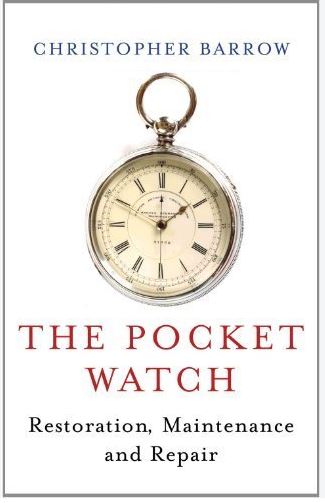
That prompted me to dust off an old book from my collection: The Pocket Watch: Restoration, Maintenance and Repair by Christopher Barrow. I had owned it for some time but had never really sat down and read it properly. This time I worked my way through it over the course of a week, with my recent workshop experience still fresh in my mind.
Practical approach to the bench
The book takes a practical approach. Rather than covering every possible pocket-watch movement, Barrow works through representative examples: Lever, Fusee, Verge and Cylinder. These date from the late eighteenth to the early twentieth century.
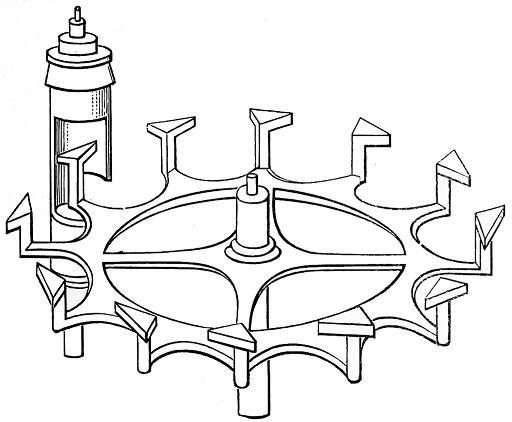
Each becomes a case study in dismantling, cleaning and reassembling a movement, with discussion of the tools and materials required. Barrow’s practical experience comes through strongly, and his writing has the reassuring tone of an experienced watchmaker explaining what he does at the bench.
Is it really for a beginner?
Having recently received practical instruction at a watchmaking workshop, I could follow much of what Barrow describes. With no practical experience, however, I suspect I would have struggled. There is an assumed level of knowledge. Components and mechanical principles are sometimes introduced before the reader has been given a clear visual explanation of what they are or where they sit within the movement. A labelled photograph or diagram would make much of the book easier to understand. The writing is accessible, but I would not describe this as a true beginner’s guide. There is a difference between instructions that are easy to read and procedures that are easy for a beginner to perform.
Layout and repetition
My biggest criticism is the organisation of the text and photographs. Illustrations are frequently separated from their explanations, requiring the reader to turn backwards and forwards between pages. The photographs are often good, but there are too few step-by-step images of delicate operations. Procedures involving hairsprings, escapements and fusee chains are precisely where words alone are least satisfactory. More close-up photography would be a considerable improvement.
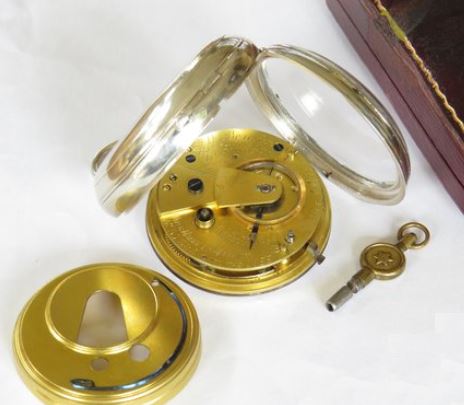
There is also repetition. Because each watch is a self-contained case study, procedures such as removing the dial, cleaning and reassembly are explained several times. This makes individual chapters useful in isolation but noticeable when read cover to cover.
Maintenance more than restoration
Perhaps my greatest reservation concerns the title. Restoration, Maintenance and Repair suggests comprehensive treatment of all three subjects. In practice, the book is much stronger on maintenance and repair than serious restoration.
Dismantling, cleaning and reassembling receive plenty of attention, but coverage becomes thinner when dealing with restoring a damaged antique watch. I would have welcomed more detail on lubrication, adjustment and fault diagnosis.
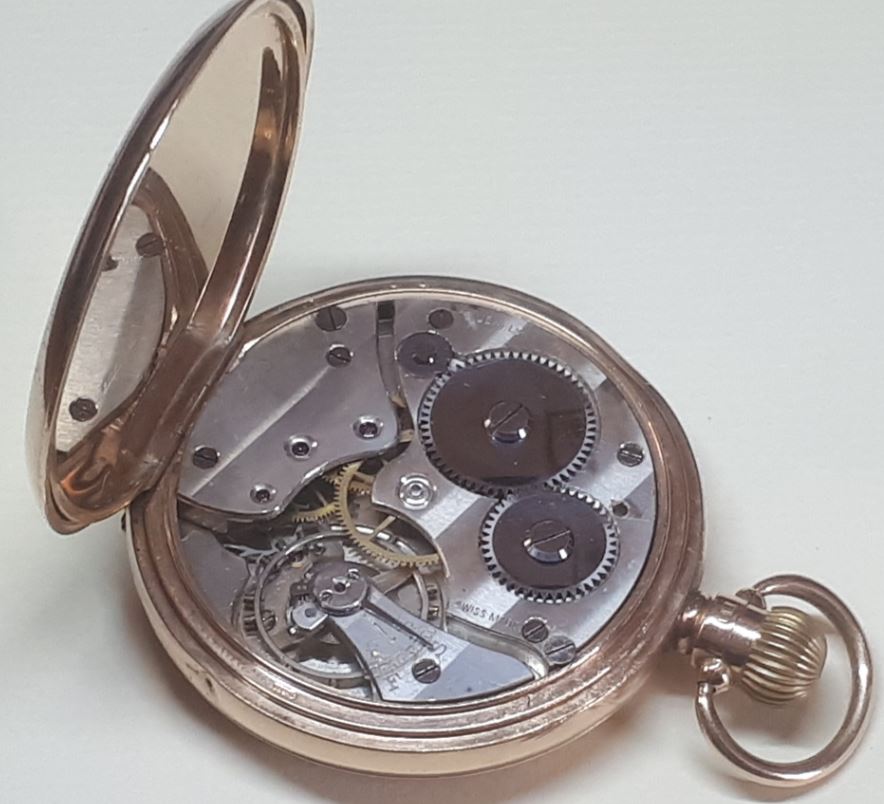
There is a considerable gulf between cleaning an old movement and restoring damage accumulated over a century or two. This book takes the reader some way across that gulf, but not all the way.
Who is it for?
Despite these criticisms, I enjoyed the book and learned from it. I am an experienced collector with a reasonable understanding of antique watches, but limited practical watchmaking experience. Having dismantled and successfully reassembled a mechanical watch under supervision, I had enough hands-on knowledge to understand much of what Barrow describes. For someone in a similar position, the book offers a lot. It provides a useful bridge between collecting watches and understanding what happens when one is placed on the watchmaker’s bench.
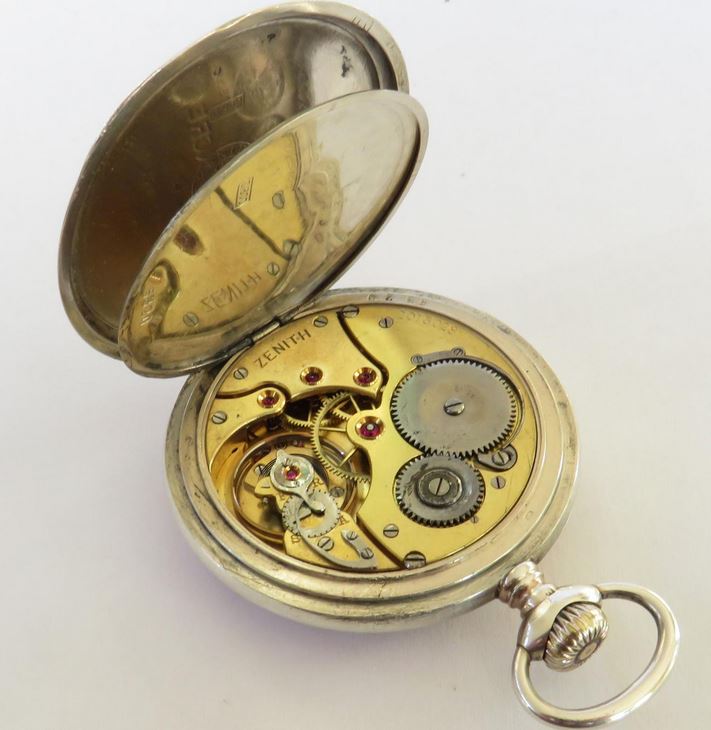
I would be cautious about recommending it to a complete novice, who would benefit from practical tuition or a more heavily illustrated guide. Conversely, an experienced repairer is unlikely to find sufficient depth on advanced restoration. Its natural audience is the knowledgeable enthusiast taking their first serious steps towards practical watchmaking.
Summary
The Pocket Watch: Restoration, Maintenance and Repair is clearly the work of an author with considerable knowledge and practical experience. Its weaknesses are largely instructional: text and illustrations are not always well coordinated, some procedures need more visual explanation, and servicing instructions can become repetitive. Despite its title, the book is more convincing as a guide to dismantling and reassembling pocket watches than to restoration.
Would I recommend it? Yes, but to the right reader. If you collect pocket watches, understand the basics of a movement and have some practical experience, there is plenty here to learn from. A complete beginner would be better using it alongside hands-on instruction rather than as a sole teacher.
After years of collecting watches from the safe side of the case, a watchmaking workshop gave me the confidence to venture inside one. Barrow’s book has helped me understand more of what I found there, while reminding me just how much there is still to learn.
Related content
The Pocket Watch: Restoration, Maintenance and Repair by Christopher Barrow at Amazon UK.