Last updated on December 17, 2025
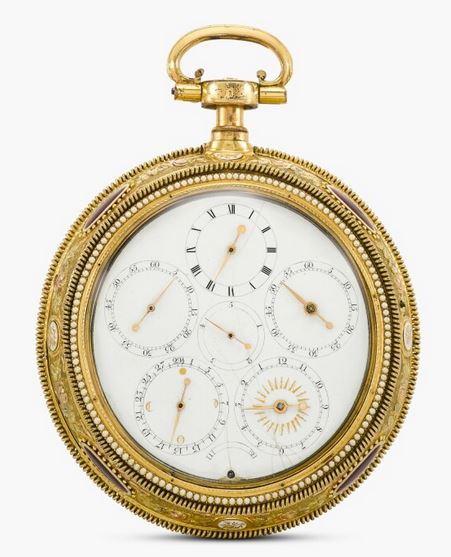
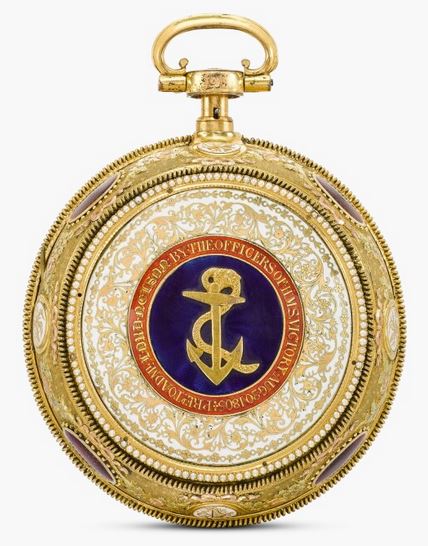
Sotheby’s auction house ran its Fine Watches auction from the 9th to the 17th of December 2025. Amongst the 51 lots was the extraordinary musical watch given to Lord Nelson just months before he died. The Victory Watch made by James McCabe and presented to Admiral Lord Nelson by the officers of HMS Victory, included an inscription, “Pres. to Adml. Lord Nelson By the Officers of HMS Victory Aug 20 1805”. The auction sale was brought to the attention of Time Worn Watches during one of our regular meetings.
Lord Nelson
Horatio Nelson (1758 – 1805) joined the Royal Navy at twelve and became a captain by twenty. He quickly earned fame for his aggressive leadership and innovative tactics during the French Revolutionary Wars. Nelson frequently led from the front, demonstrating a level of personal bravery that inspired deep devotion in his sailors and fellow officers.
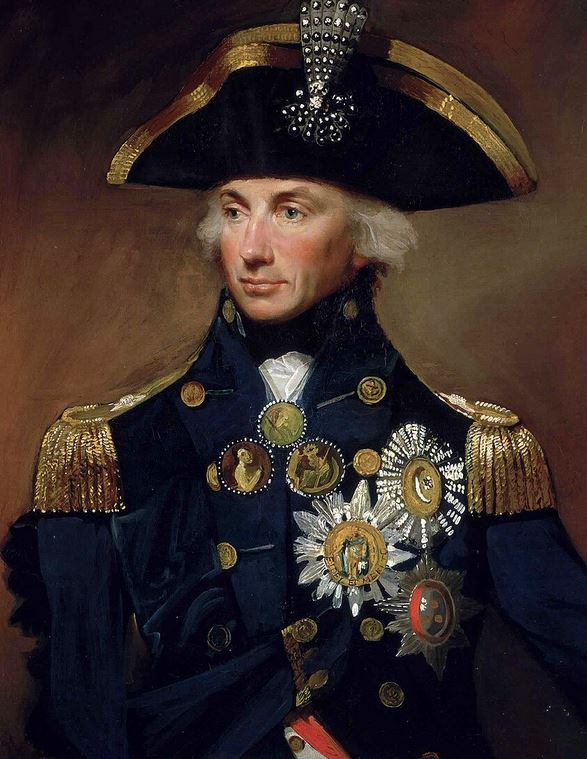
Nelson suffered significant physical sacrifices in service, losing sight in his right eye at Corsica and his right arm at Tenerife. Nevertheless, he secured brilliant victories at the Nile and Copenhagen. He famously ignored a withdrawal signal during the latter engagement by placing his telescope to his blind eye, proving his unwavering determination to achieve total victory.
In 1805, Nelson achieved his greatest triumph at the Battle of Trafalgar. Using unconventional manoeuvres, he crushed the combined French and Spanish fleets and ended the immediate threat of a Napoleonic invasion. Though a sniper fatally wounded him during the engagement, his victory established a century of British naval dominance. He remains the nation’s most iconic and venerated maritime hero (Horatio Nelson at Wikipedia).
James McCabe, watchmaker
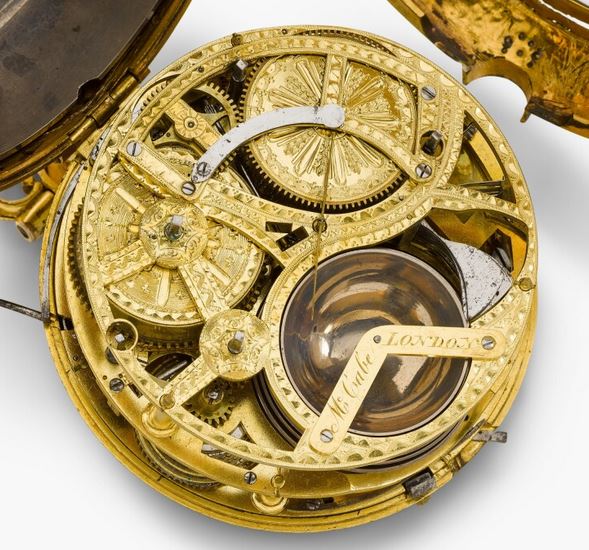
James McCabe founded a famous London watchmaking family. He was born in Ireland, near Belfast, around 1748. McCabe began his career in Belfast around 1770. Collectors still find early watches signed “James McCabe, Belfast” from this era. He eventually moved to London in early 1775. Initially, he established his workshop at Bells Building on Fleet Street. He then moved the business to 34 King Street, Cheapside. By 1788, he operated from 8 King Street. He finally settled at 97 Cornhill in the Royal Exchange.
McCabe quickly earned a prestigious reputation for crafting fine watches. The Clockmakers’ Company admitted him as an Honorary Freeman in 1781. He later served as the company’s Senior Warden. These achievements cemented his status within the London trade. In 1779, he married Elizabeth Burn. The family moved to Stoke Newington by the 1790s. His business continued to thrive from the Cornhill office during this time. McCabe died in 1811. He left behind one of the most successful watchmaking enterprises of his generation (James McCabe at The British Museum).
Movement and complications
The watch measures 120 mm in diameter and was clearly not designed for the pocket of a Naval officer working the quarterdeck. Inside is a four-train, two-tier movement with a fusee and chain. It included a cylinder escapement for the going train, and separate trains for striking, alarm, and music. Two tunes could be played via a pinned barrel connected via eleven levers to eleven hammers striking on a nest of six bells. The sound would have been bright, insistent, and designed to be heard in a room with people talking. A larger seventh bell was mounted within the case back to deliver quarter striking.
The white dial enamel. Alongside hours and minutes was a central fifths-of-a-second display, enclosed by 5 further subsidiary dials for hours, minutes, seconds, alarm, lunar date, and a tune selection arc at the base. This layout makes the point that the watch was designed to entertain. Needless to say, the watch was not designed for the battlefield.
Nelson’s final summer
The watch case bears a presentation inscription from the officers of HMS Victory to Admiral Lord Nelson. The officers commissioned this watch for the commander they knew at sea, but they recognised his desire for music and calm during difficult times. They presented this watch to him on the 20th August 1805 during the height of his final summer.
Nelson had recently returned to England after a long, exhausting command at sea. The British public celebrated him as a national monument wherever he went. He soon slipped away to Merton Place in Surrey to enjoy a brief, peaceful domestic life. This house centred around Emma Hamilton, their daughter Horatia, and the familiar rituals of guests and dinners. These small civilities of life ashore offered him the comfort he truly valued. However, the strategic situation tightened within a fortnight as international tensions rose.
News of the combined French and Spanish fleets at Cádiz forced his immediate recall to duty. Nelson left Merton before dawn on 14 September 1805 and returned to Portsmouth. He set sail on HMS Victory within hours, never to return to English shores again. The Victory watch does not appear in the inventories of Nelson’s possessions taken after his death. It clearly remained at home.
Auction results
Sotheby’s initial estimate for the Vicory watch was £200,000 – £400,000. Sotheby’s closed its Fine Watches sale in London on the 17th December. The Victory Watch made by James McCabe and presented to Lord Nelson by the officers of HMS Victory sold for £152,400, fees included, below the low estimate.