IWC, otherwise known as the ‘International Watch Company’, has largely flown under the Time Worn Watches radar. In this post, we explore the history behind the brand and discover some of its most important models and innovations.
Foundations and early years (1868–1880)
The history of IWC began in 1868 when Florentine Ariosto Jones, a skilled American engineer and watchmaker from Boston, Massachusetts, established the ‘International Watch Company’ in Schaffhausen, Switzerland. Jones, a former director at the prominent American firm E. Howard & Co. observed the American watch industry was dominated by highly industrialised manufacturers, yet also recognised the unparalleled craftsmanship of Swiss watchmakers. His visionary plan was to fuse these two disparate worlds: he would combine advanced American production technology with the renowned skill of Swiss artisans. This was a radical concept in a Swiss industry largely based on établissage, a decentralised cottage system, where skilled labour operated from their homes (Etablissage at FHF).
The establishment of IWC in Schaffhausen, a town far from the traditional French-speaking Swiss watchmaking hubs, was a highly deliberate decision. Jones faced significant opposition to his factory-based model in French-speaking Switzerland. In Schaffhausen, however, he found ideal conditions, including modern factory premises and access to cheap, plentiful hydropower to run his machines from a plant recently built by local industrialist Johann Heinrich Moser (IWC at Watch Wiki).
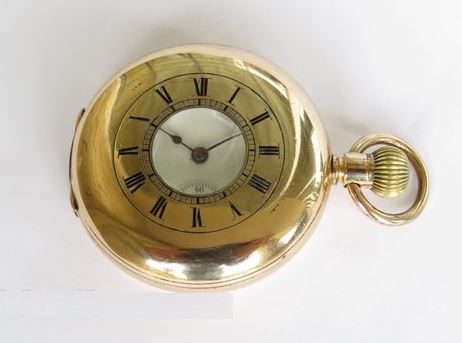
Financial struggles
Despite his visionary plan, Jones’s enterprise encountered significant financial difficulties. By 1875, stockholders claimed the company was on the brink of collapse, and Jones was forced to return to America. The company had underestimated the capital required for its ambitious operation and was producing more raw movements than it could finish. Crucially, its business model was vulnerable to external market forces; an economic recession that had begun in the American market in 1873, coupled with an oversupply of watches from large American manufacturers and high import tariffs, severely restricted the demand for IWC’s products. The company filed for bankruptcy, and following a brief period under a Swiss consortium, it was sold to a new owner in 1880.
Swiss ownership and innovations (1880–1939)
Following the financial turbulence of its early years, IWC found stability and a new direction under the long-term stewardship of a local Schaffhausen family. On 17 February 1880, Johann Rauschenbach-Vogel, a Schaffhausen industrialist, acquired the company for 280,000 francs. This transferred ownership from American to Swiss hands. His son, Johannes Rauschenbach-Schenk, took control a year later. The new management transformed the company’s business model, consistently improving manufacturing processes and design, and shifting sales to a global, rather than a single export, market.
Four generations of the Rauschenbach family would own and guide the company. In 1905, Ernst Jakob Homberger took the helm, having joined the family through marriage to Rauschenbach’s youngest daughter. As a strict, old-school proprietor, he successfully steered IWC through the difficult years of the 1930s economic crisis. This continuity of family ownership cemented a commitment that transcended short-term financial pressures and allowed the company’s reputation for quality to grow. In 1903, IWC established a new identity by adopting the Latin motto “Probus Scafusia”. This translates to “Craftsmanship made in Schaffhausen” (IWC at Grail Watch Wiki).
Early watch models
Under its new leadership, IWC began to produce wristwatches as early as 1899. However, its reputation was truly forged through the development of specialised timepieces for demanding professions. In 1884, the company started producing the first Pallweber pocket watches. These featured an innovative digital display for the hours and minutes. This strategic focus on function was a defining divergence from other brands, which concentrated on decorative or dress watches.
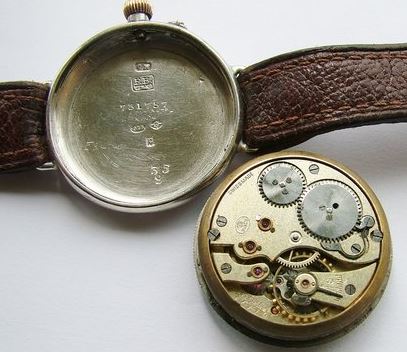
In 1936, the company developed the “special watch for airmen”. This laid the groundwork for a family of legendary Pilot’s Watches. This timepiece was equipped with a black dial, luminous hands, and a rotating bezel, and it featured magnetic field protection. In 1939, two Portuguese merchants commissioned a large wristwatch with the accuracy of a marine chronometer. The company’s watchmakers solved this by incorporating a high-precision pocket watch calibre (Calibre 74) into a wristwatch case. This was the birth of the Portugieser. At the time, its 41.5mm diameter was considered “a gargantuan monster of a watch”. It was a commercial failure, with only 690 examples sold between 1939 and 1981.
Conclusion
This period of innovation was a response to the needs of professional markets. This moved the brand beyond simple timekeeping to produce tool watches. This focus on precision, durability, and functionality began IWC’s reputation as a company that prioritised engineering over elegance.